The EU AI Act is the first comprehensive regulation for artificial intelligence in Europe. It defines how AI systems must be developed, used and monitored. For your company, this means new opportunities through trust in AI – but also clear obligations regarding transparency, security and compliance.
Our AI consulting helps you implement the requirements in a practical and efficient way – from the analysis and governance structures to documentation.
At the same time, our AI training courses make your team fit for the new legal requirements.
You can find current developments and practical insights in our news.
As a company, you must ensure that your AI systems meet the legal requirements. These include:
Our AI consulting supports you in implementing an effective compliance framework and helps to integrate the new obligations efficiently into existing processes. In addition, our AI training courses offer targeted training to raise employees’ awareness of the requirements of the law.
The EU AI Act distinguishes between high-risk and low-risk systems. High-risk AI in particular is subject to strict requirements, as it has a direct impact on fundamental rights, safety and critical processes. This includes, among others:
Strict obligations apply to these systems with regard to transparency, documentation, risk management and training. Companies must ensure that their applications are operated in a traceable, secure and compliant manner.
Violations of the EU AI Act can be expensive. Fines of up to EUR 30 million or 6% of worldwide annual turnoverare possible.
In addition to financial penalties, there is often considerable reputational damage.
Early compliance strengthens trust among customers, partners and employees.
A key requirement of the EU AI Act is the training obligation. Your employees must learn to use AI systems safely, recognise risks and comply with regulatory requirements.
Our AI training courses cover these requirements – from the basics to practice-oriented training for specialist departments.
Timeline and entry into force
The EU AI Act was adopted in early 2025 and is coming into force in stages. Depending on the risk class of your AI systems, you will be affected sooner or later. High-risk applications in particular, such as biometric systems or critical infrastructure, require short-term adjustments. You can find out which of your solutions may be affected in our AI applications.
Scope for companies, providers and users
The EU AI Act applies to all companies, providers and users of AI systems that are active in the EU – regardless of whether your company is headquartered in Europe. It therefore affects not only large corporations but also medium-sized and small companies as soon as AI is used in everyday business.
We show you how to integrate the regulatory requirements into your business strategy in our AI consulting or in our training on the EU AI Act.
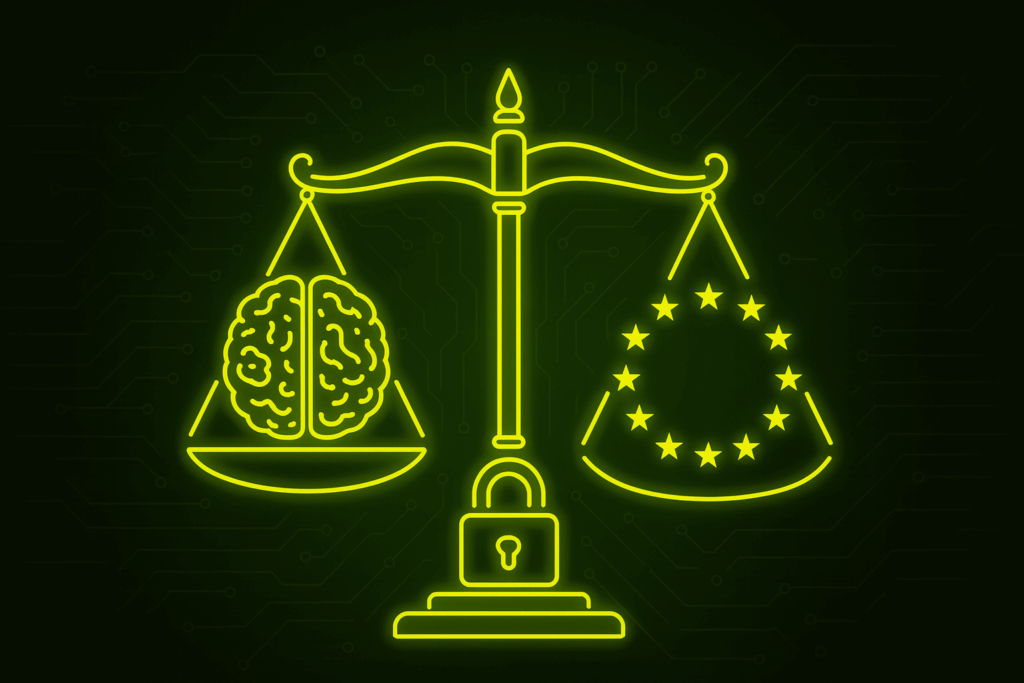
Obligations, sanctions and implementation timeline
The EU AI Act was adopted in 2025 and is coming into force step by step.
High-risk systems have to be adapted particularly early.
You can find out which systems are affected under AI applications.
To all companies, providers and users of AI systems that operate in the EU – regardless of where they are headquartered.
Yes. Small and medium-sized companies must also operate AI in compliance with the rules and provide the corresponding evidence.
Companies must comply with documentation obligations, establish risk management and ensure that employees are trained regularly.
Above all high-risk systems, e.g. biometric identification systems, AI in critical infrastructure, HR or financial systems and certain chatbots.
All AI applications must be operated securely, transparently and reliably.
Employees must understand how AI systems work, what risks exist and how to use them responsibly.
Our AI training courses provide the necessary knowledge.
Fines of up to EUR 30 million or 6% of worldwide annual turnoverare possible.
Early compliance protects against legal and reputational risks.
📞 Speak with our Tony now at the following number: